

Introduction to Pappedeckel and its Purpose
As society moves towards greener ways of doing things, creative packaging solutions are springing up to satisfy the need for less harmful options. The packaging industry is buzzing about Pappedeckel, a revolutionary idea. Businesses can lessen their impact on the environment without sacrificing product quality because to an ingenious design that prioritizes both practicality and sustainability. Are you interested in learning more about how this novel strategy is changing our perspective on packaging? Let’s take a closer look at Pappedeckel and see how it has revolutionized business and the environment.
How Pappedeckel is Changing the Packaging Industry
By providing a more environmentally friendly option to traditional materials, Pappedeckel is causing a stir in the packaging business. This product, crafted from biodegradable paperboard, offers a sustainable option that reflects the ideals of today’s consumers.
Thanks to this cutting-edge substance, less plastic is wasted and less harm is done to the environment. They offer a realistic alternative without sacrificing quality or utility as companies move toward sustainability.
Companies may improve their branding while supporting ecological efforts because to its adaptability, which appeals to numerous industries such as food & beverage and cosmetics.
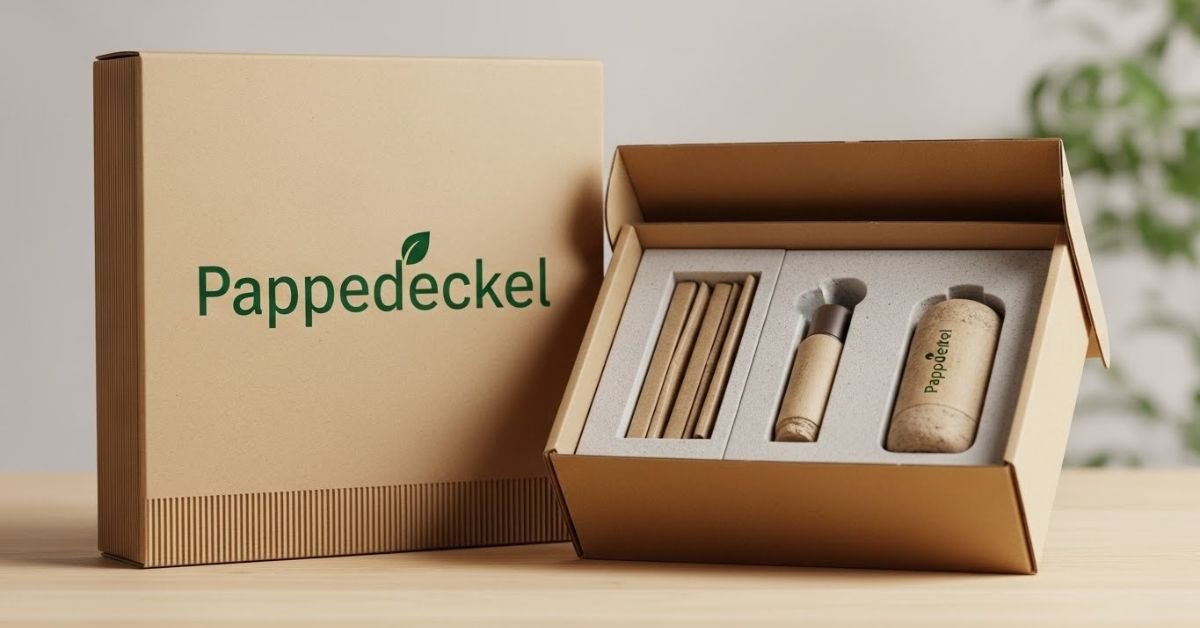
An additional selling point is how simple it is to personalize. Pappedeckel surfaces are perfect for direct printing of graphics, allowing brands to effortlessly create distinctive packaging.
Businesses who want to remain relevant in the ever-changing market may soon find that adopting it is a requirement, rather than a luxury, due to the growing number of rules against single-use plastics.
Advantages of Using Pappedeckel
Both companies and consumers can benefit from Pappedeckel’s many offerings. Manufacturers may save a lot of money on shipping because to its lightweight construction.
Plus, it’s quite adaptable to your needs. Printing logos or graphics directly onto packaging is a simple way for brands to increase their presence on shelves and online.
From a practical standpoint, this cutting-edge material offers superior product protection. Objects are protected from harm while in storage or transportation thanks to its strong construction.
Its little environmental impact is another major perk. Pappedeckel is perfect for eco-conscious shoppers who value sustainable products because it is completely recyclable and crafted from renewable resources.
This method helps businesses satisfy both customer demand and government regulations pertaining to the decrease of packaging waste. Brands that embrace it differentiate themselves in a sustainability-focused market.
Sustainable Practices in Packaging
Contemporary packaging solutions prioritize sustainable methods. By utilizing renewable resources, Pappedeckel presents a groundbreaking transition towards environmental friendliness.
This revolutionary substance is mostly composed of paper, which greatly lowers the amount of plastic trash. Because of its biodegradability, it may break down in nature without causing any harm to Mother Earth.
Businesses may help create a more sustainable economy by choosing pappedeckel. They cater to customers’ needs for eco-friendly products while reducing their impact on the environment.
In addition, companies that use this strategy usually see an increase in client loyalty. Sustainability ranks at the top of the list of consumers’ ideals that products should embody.
And that’s not all: pappedeckel also promotes ethical sourcing methods. Businesses should collaborate with vendors that share their commitment to environmental protection.
They are the embodiment of sustainable packaging, the future of packaging that combines form and function.
Case Studies of Companies Implementing Pappedeckel
A number of innovative businesses are demonstrating the adaptability and efficacy of pappedeckel by being the first to apply it in their packaging strategy.
An established organic food company that made the switch to pappedeckel for their snack line is a prime example. This change not only made a dent in plastic waste, but it also made the sustainable material more visually appealing by printing bright images on it.
In a separate instance, a beverage firm used them for their line of environmentally conscious beverages. This creative packaging not only improved product freshness but also conveyed their dedication to sustainability.
The use of pappedeckel for the packaging of artisanal breads and pastries has also been adopted by a nearby bakery. The tactile feel and ecologically aware decision are highly valued by customers, who are increasingly seeking sustainable solutions.
These examples show how many sectors are benefiting from using it in their processes.
Challenges and Limitations of Pappedeckel
There are obstacles, even though Pappedeckel offers novel answers. Improving the ability to scale up manufacturing is a major challenge. Keeping up with rising demand without sacrificing quality can be a challenge for manufacturers.
Obtaining the necessary materials is another issue. Supply chains and prices are impacted by the inconsistency in the availability of sustainable raw resources. Businesses need to be cautious as they manage these intricacies.
In addition, its advantages are unknown to certain buyers. Spending time and money on marketing tactics to inform consumers about its benefits is essential.
It can be logistically challenging for well-established organizations to switch from conventional packaging methods to Pappedeckel. Adaptation frequently necessitates substantial modifications to machinery and procedures.
Despite its apparent environmental benefits, some worry that it lacks the durability of more traditional alternatives for specific products. In planning for the future, it will be essential to strike a balance between efficiency and environmental impact.
Future Outlook for Pappedeckel in the Packaging Industry
In the packaging sector, pappedeckel appears to have a bright future. Sustainable alternatives are in high demand due to the growing number of environmentally concerned customers.
This progress will be greatly aided by innovation. To improve functionality while maintaining a focus on sustainability, companies are investigating new materials and production methods.
The expansion of use across many industries is anticipated. Food and beauty companies alike are beginning to see pappedeckel for what it is: a sustainable packaging solution that may help them meet their environmental goals.
The speed with which it becomes standard practice could be accelerated by regulatory demands as well. They are one of several eco-friendly alternatives that are being made possible by governments throughout the world that are cracking down on single-use plastics.
Further breakthroughs might be driven by collaboration across enterprises as well. By exchanging ideas, we can make pappedeckel better and more efficient, which will increase its attractiveness in many markets.
Conclusion
A more environmentally friendly packaging future is being set in motion by Pappedeckel. Its cutting-edge style and practical features are more than fads; they herald a sea change in ethical product packaging. Companies who use these solutions will not only help the environment, but will also boost their reputation in the marketplace.
To stay competitive in today’s environmentally concerned industry, pappedeckel is a great option because to its many benefits, including as decreased waste and enhanced recyclability. The increasing amount of case studies highlights its efficacy in many industries, which encourages others to adopt it.
The problem is that there are obstacles, just as with every new solution. To maximize advantages and minimize negatives, companies must carefully manage these obstacles.
It seems that pappedeckel has a bright future in the packaging sector. We could witness a wider adoption of this revolutionary strategy if more firms make innovation and sustainability their top priorities. A cleaner world and long-lasting transformation in many industries might be ours if we embrace such innovations.